In short. The Sahara in Morocco means the dunes of Erg Chebbi near Merzouga, the smaller dunes near Zagora, and the rocky plain of Agafay near Marrakech. Most travellers pick Merzouga for the tall dunes and a night in a camp. This guide compares the three deserts, explains what a tour covers, what a camp night is really like, and how to choose the trip that fits your days and your budget.
Merzouga and Erg Chebbi: The Classic Sahara
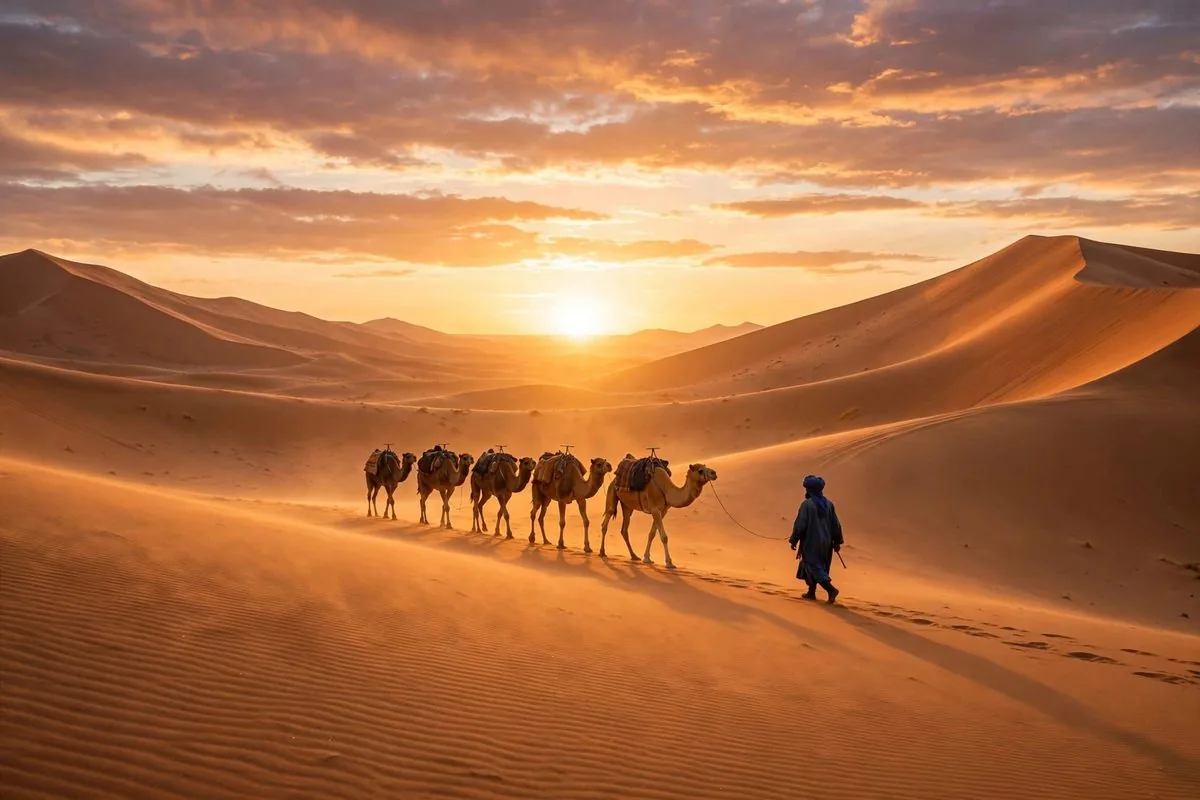
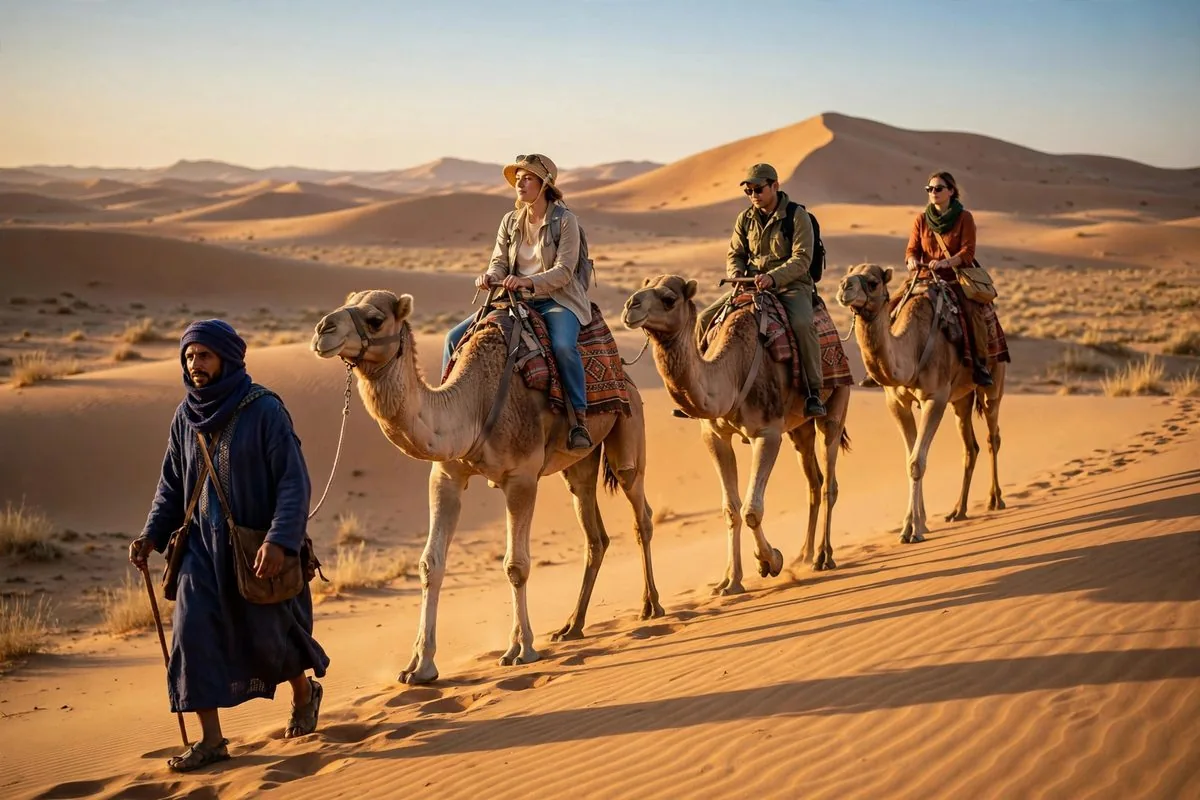
Erg Chebbi is a sea of sand dunes near the town of Merzouga, in the south-east of Morocco. The dunes rise up to 150 m, and they change colour through the day, from gold at noon to orange at sunset. The drive from Marrakech takes about 9 to 10 hours over two days, and from Fes it takes about 7 to 8 hours. Most tours reach Merzouga on the second day and ride camels to the camp at sunset.
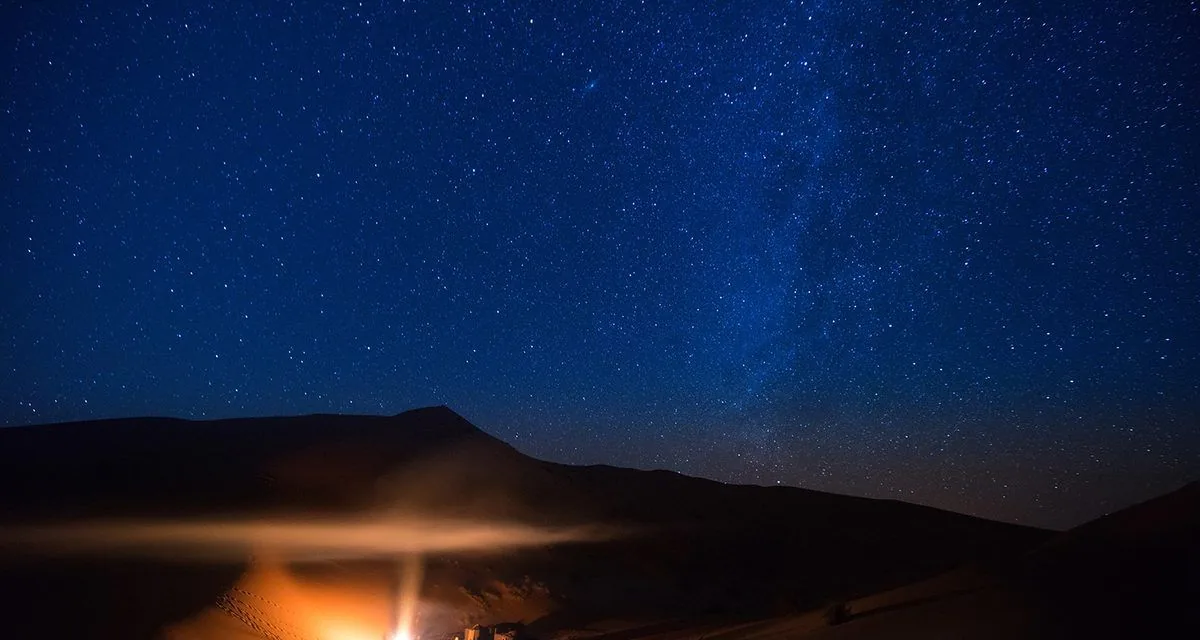
The camp sits among the dunes, about an hour by camel from Merzouga. Tents have beds, blankets and rugs, and standard camps have shared bathrooms a short walk away. Luxury camps have private bathrooms and proper beds. Dinner is a tagine or grilled meat, served with bread and tea, and the evening has music around a fire. The night sky is dark and full of stars.
Zagora and the Draa Valley
Zagora is the second desert option, about 360 km south of Marrakech and a 6 to 7 hour drive. The dunes near Zagora are smaller and lower than those at Merzouga, and the camp sits near a rocky plain rather than deep sand. A 2-day tour from Marrakech works for Zagora, which is why some travellers pick it when they are short on time.
The road to Zagora runs through the Draa Valley, a long palm grove with old kasbahs and small villages. It is a pretty drive, and the valley is worth seeing. If you have only two days, Zagora is a fair choice. If you have three days, Merzouga is better, as the dunes are taller and the camp feels more like the Sahara. Ask your tour company which desert the trip visits before you book.
Agafay: The Desert Near Marrakech
Agafay is a rocky desert about 45 minutes from Marrakech. It has no big sand dunes, but it has hills, dry plains and camps with sunset views. It works for a day trip or one night, and it suits travellers who cannot spare three days for Merzouga. A camel ride, a quad bike and dinner at a camp are the main activities in Agafay.
Agafay is not the Sahara, and a good company will say so. It is a good taste of the desert, with a camp, a fire and a night sky, but the sand dunes are missing. If you want real dunes, go to Merzouga. If you want a short trip close to Marrakech, Agafay is a good choice. It is also a good option in summer, when the long drive to Merzouga is very hot.
What a Night in a Desert Camp Is Like
You reach the camp by camel at sunset, about an hour from Merzouga. The camels walk in a line, and the guide leads them. You leave your main bag at the hotel in Merzouga and take a small overnight bag. At the camp, you are shown to your tent, and tea is served. The tents have beds, blankets and rugs, and the camp has a dining tent and a fire area.
Dinner is served after sunset, and the evening has music, drums and tea around the fire. The sky is dark, and the stars are clear. Most people sleep well, as the night is quiet. In the morning, you wake before sunrise, walk up a dune, and watch the sun rise. Breakfast is bread, eggs, jam and tea or coffee. Then you ride the camel back to Merzouga.
Choosing Your Desert Tour
Pick a 3-day tour for the classic Merzouga trip from Marrakech. Pick a 2-day tour for Zagora, or a 3-day tour that ends in Fes if you want to see two cities. Pick a 4-day or 5-day tour if you want a slower pace, with two nights near the dunes or a stop in the Dades Valley. The extra day makes the drive easier and the trip more relaxed.
Check what is included: the car and driver, fuel, hotels, breakfast, the camp, dinner at the camp and the camel ride. Lunch, drinks and tips are usually extra. Check the camp type too. A standard camp has shared bathrooms, and a luxury camp has a private bathroom. Ask for the camp name if you can. A good company will name it and tell you the drive times.
What to Pack for the Desert
Pack light. Take a small overnight bag for the camp, with a warm layer, a hat, sunscreen, water and a power bank. Days are warm and nights are cool, and winter nights can be cold, so a fleece and warm socks help. Wear long trousers for the camel ride, and closed shoes for the sand and the rocky stops. A scarf helps against wind and dust.
Take cash in dirhams for lunch, drinks and tips. Lunch on the road costs about 8 to 20 euros per person, and road restaurants take cash only. There is no plug in most standard tents, so charge your phone before the desert. A power bank is worth packing, as you will want your phone charged for photos at sunrise, and the camp has no plugs in a standard tent. Bring a torch for the walk to the bathroom at night, and a small bag for your passport and money.
When to Go to the Sahara
Spring and autumn are the best times for the Sahara. March to May and October to November give warm days, cool nights and clear skies. The camel ride is fun at any hour, and the camp night is comfortable. Summer is very hot, with days over 40 degrees, so the camel ride moves to the late afternoon. Winter days are warm and sunny, but nights can be cold, near freezing at times.
Book early for spring and autumn, as the camps fill fast. Winter is quieter and cheaper, and the dunes are empty. Summer is the quietest season, but the heat is hard. Pick the month that fits how you handle heat and cold, and tell your tour company what matters to you. If you travel in winter, ask for a camp with thick blankets and a warm tent, and if you travel in summer, ask for a late camel ride so you cross the dunes in the cooler evening light. They can pick the camp and the start time that fits your dates.