In short. Morocco uses the Moroccan dirham, and cash is still king outside the big cities. Cards work in hotels and big restaurants, but not in the desert or in small villages. A local SIM card costs little and gives you data for maps and messages. This guide explains money, ATMs, cards and SIM cards, so you can pay and stay online without stress.
The dirham: what to know
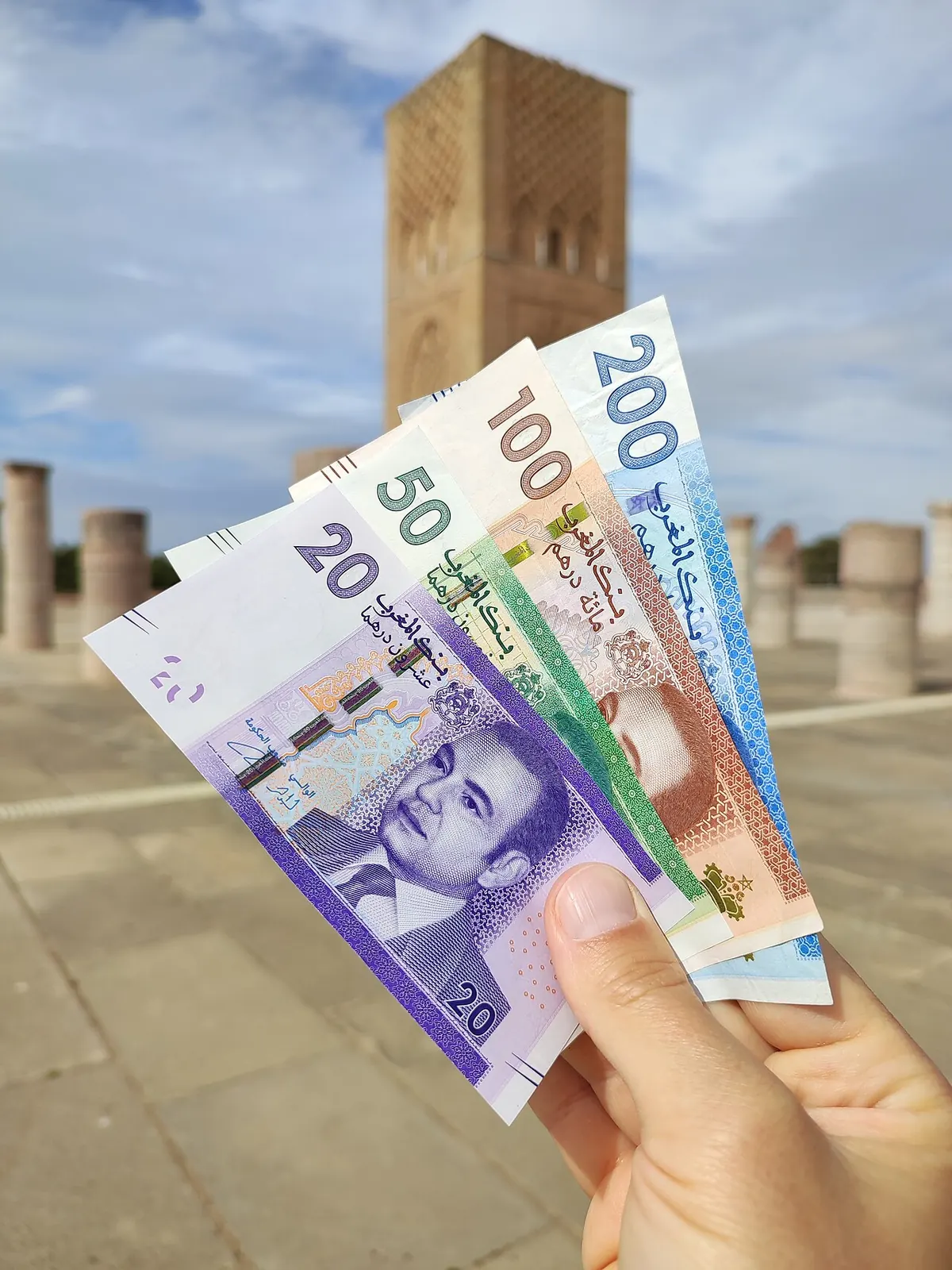
The Moroccan dirham is the only money used in Morocco. Shops do not take euros or dollars, except in a few tourist places, and the rate is poor. One euro is about 10 to 11 dirhams, but the rate changes, so check on the day. Coins come in 1, 2, 5 and 10 dirhams. Notes come in 20, 50, 100 and 200 dirhams.
Keep small notes and coins. A 20 dirham note and a 50 dirham note cover lunch, a taxi and a tip. A 200 dirham note is hard to change in a small shop or a cafe. Change a large note in a hotel, a bank or a big shop. Do not take dirhams out of Morocco, because the law says you cannot export them. Spend them or change them before you fly home.
Cash, ATMs and cards
Take cash from an ATM in Marrakech, Fes or Casablanca. ATMs are easy to find in the cities and at the airport. Most ATMs take foreign cards and give dirhams. The ATM fee is often 20 to 35 dirhams per withdrawal, so take a larger amount once, not a small amount many times. Tell your bank you travel, so your card is not blocked.
Cards work in hotels, riads, big restaurants and shops in the cities. Visa and Mastercard work best. American Express works in fewer places. Cards do not work in the desert, in small villages, in taxis or in market stalls. Lunch on the road costs about 8 to 20 euros per person, and road restaurants take cash only. Take cash before the desert.
How much cash to carry
For a day in a city, carry 300 to 500 dirhams in cash for lunch, taxis, tips and small buys. For a 3-day desert tour, carry 600 to 900 dirhams for lunch, drinks, tips and small buys. Keep the cash in two places, so you do not lose all of it at once. A money belt or a zip pocket inside your day bag works well.
Do not carry a lot of cash at night in a busy square. Take what you need for the evening and leave the rest in the hotel safe. If your hotel has no safe, keep the cash in your bag and lock the room. Morocco is safe, but a busy square is a good place for a pickpocket. Keep your phone and wallet in a front pocket.
Changing money
Change money in a bank or a licensed bureau in the city. The rate is better than at the airport or in a hotel. Bring your passport, because some bureaus ask for it. Do not change money on the street. The rate may look good, but the notes may be false or the count may be short. Use a bank or a bureau.
You can also take dirhams from an ATM, which is often the easiest way. The ATM rate is the bank rate, plus a fee. If your bank has a travel card with no foreign fee, use it. Change a small amount at the airport for the taxi, then change more in the city. The taxi from Marrakech airport to the medina costs about 70 to 100 dirhams.
SIM cards: where and how
Buy a local SIM card at the airport or in a phone shop in the city. The main networks are Maroc Telecom, Orange and Inwi. Maroc Telecom has the best cover in the desert and in the mountains. Orange and Inwi work well in the cities. A SIM card costs about 20 to 30 dirhams, and a data pack with 10 GB costs about 50 to 100 dirhams.
Bring your passport to buy a SIM card, because the shop must register it. The shop will put the SIM in your phone and set the data for you. Make sure your phone is unlocked before you travel. If your phone is locked to your home network, a local SIM will not work. Check with your home network before you fly.
Data, signal and Wi-Fi
Mobile data works well in the cities and on the main roads. The signal drops in the mountains and in the desert, so download your maps before you leave Marrakech. A 10 GB pack is enough for a week of maps, messages and photos. Use Wi-Fi in the hotel to save data, and use data on the road.
Wi-Fi is free in most hotels, riads and cafes in the cities. The speed is fair, but it can be slow when many people use it. There is no Wi-Fi in most desert camps, and the mobile signal is weak there. Tell your family before the desert night, so they do not worry. The camp is a good place to put the phone away for one night.
A simple money and SIM plan
On arrival, take cash from an ATM at the airport and buy a SIM card at the airport shop. Change a small amount for the taxi. In the city, take more cash from an ATM and keep small notes for the day. Before the desert, take cash for 3 days and download your maps. That plan covers money and data for the whole trip.
If you stay only in the cities, a card and a small amount of cash are enough. If you go to the desert, cash is a must. If you travel for 2 weeks, top up your data once in a phone shop. Top-ups cost 20 to 100 dirhams and take a few minutes. Ask the shop to do it for you.
A money and SIM checklist
Use this checklist on arrival in Morocco. Take cash from an ATM at the airport and buy a SIM card at the airport shop. Bring your passport for the SIM, and make sure your phone is unlocked before you fly. A SIM costs about 20 to 30 dirhams, and a 10 GB data pack costs about 50 to 100 dirhams. Maroc Telecom has the best cover in the desert and the mountains. Change a small amount for the taxi, then change more in a bank or a bureau in the city. The taxi from Marrakech airport to the medina costs about 70 to 100 dirhams, so have small notes ready.
Before the desert, take cash for 3 days: 600 to 900 dirhams for lunch, drinks, tips and small buys. Download your maps before you leave Marrakech, because the signal drops in the mountains and in the desert. Tell your family you will be offline for the camp night, because most camps have no Wi-Fi. Keep your cash in two places, and keep your phone and wallet in a front pocket in busy squares. If you stay only in the cities, a card and a small amount of cash are enough. If you go to the desert, cash is a must.