In short. Ait Ben Haddou is an old clay village on the road from Marrakech to the desert, about 3 to 4 hours from Marrakech. It is a UNESCO site, and it is the main stop on day one of most desert tours. You walk through the village, climb to the top for the view, and leave in 1 to 2 hours. This guide explains what you see, how long to stay, and what to know before you go.
What Ait Ben Haddou is
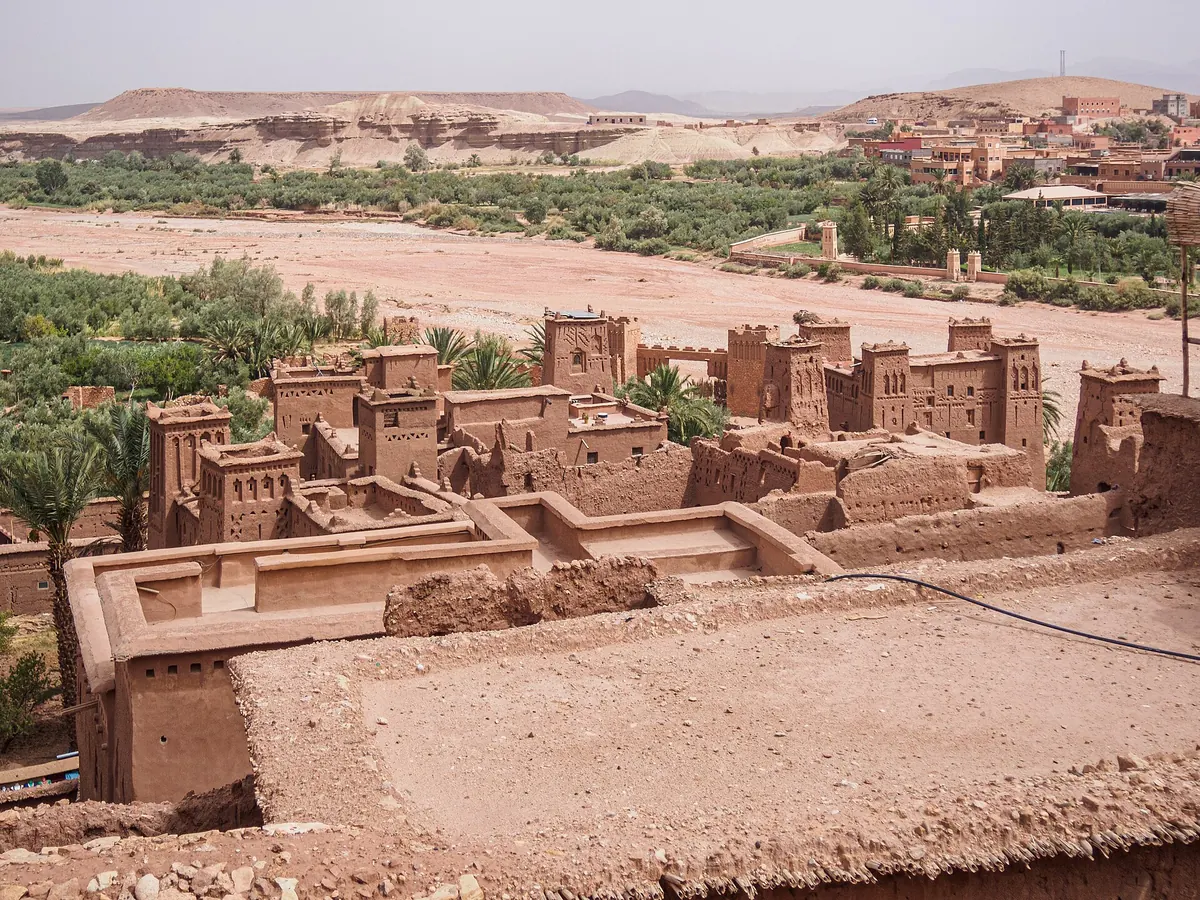
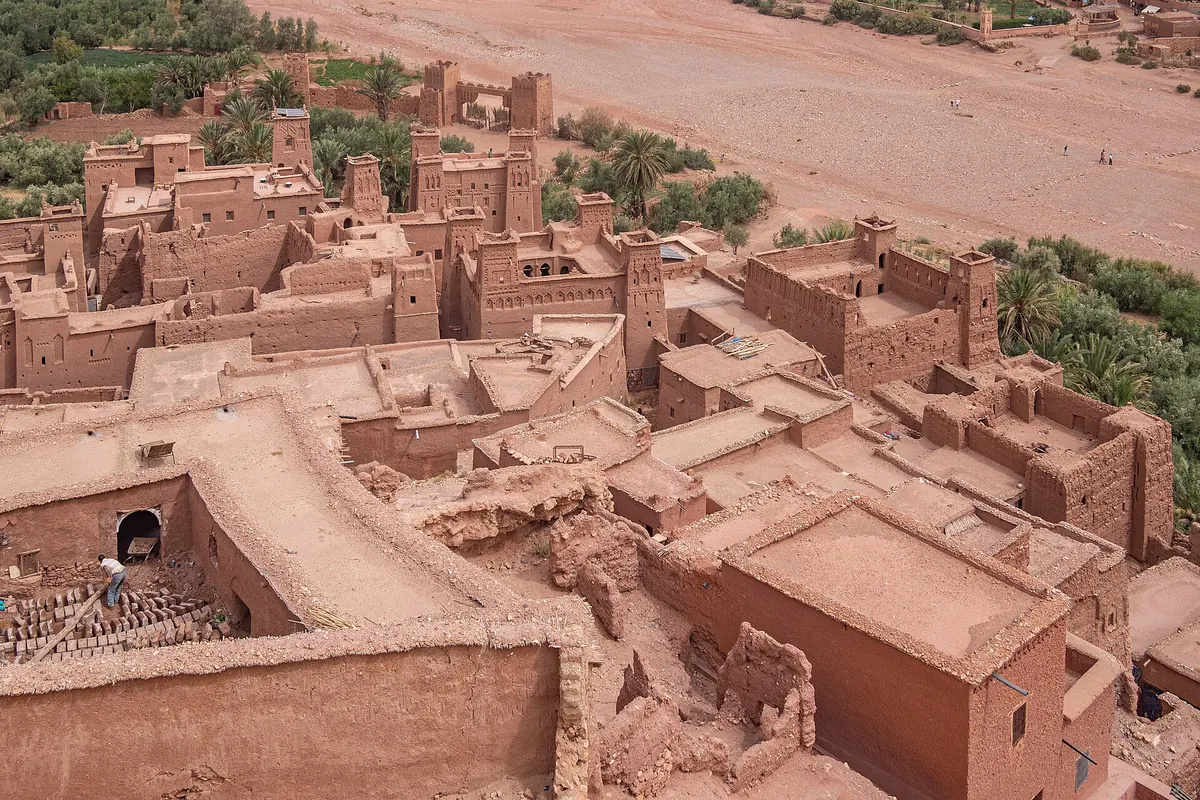
Ait Ben Haddou is a ksar, a fortified village made of clay, straw and wood. It sits on a hill by a river, on the old trade road between Marrakech and the Sahara. The buildings are close together, with narrow lanes and high walls. A few families still live there, and the rest of the village is used for visits and film work.
The site is on the UNESCO World Heritage list, because it is a clear example of a southern Moroccan village built from earth. The clay walls need repair after rain, and local workers fix them each year. The village looks the same from the outside as it did many years ago. That is the point of the visit: to see how people built and lived in this dry land.
How to get there
Most people visit Ait Ben Haddou on a desert tour from Marrakech. The drive from Marrakech takes 3 to 4 hours, over the Tizi n'Tichka Pass at 2,260 m. Your driver stops at the pass, then drops you at the village. A tour gives you 1 to 2 hours there, which is enough. A day trip from Marrakech is also possible, but it is a long day with 7 to 8 hours on the road.
If you drive yourself, take the road from Marrakech over the pass to Ouarzazate, then turn to Ait Ben Haddou. The road is paved. Park in the car park across the river and walk over the bridge. A local guide waits near the car park and can show you the village for a small fee. You do not need a guide, but one helps you find the lanes and the view points.
What to see in the village
Start at the river and cross the bridge to the village gate. Walk up the main lane, past the clay houses and the small shops. The lane climbs to the top of the hill, where the old granary sits. The climb takes 15 to 20 minutes and the steps are uneven. From the top, you see the river, the palm groves and the desert road. That view is the best part of the visit.
On the way down, stop at the small museum and the viewpoints. The village has been used in many films, and the guides will point out the spots. You do not need to know the films to enjoy the place. The walls, the doors and the roofs are the sight. Plan 1 hour for a quick walk and 2 hours if you want to climb slowly and take photos.
How long to stay and when to go
One to 2 hours is enough for most people. The village is small, and the main sight is the climb and the view. Stay longer only if you want to sit in a cafe by the river or take many photos. The best light is in the morning and the late afternoon, when the clay turns gold. At noon, the sun is strong and the village is hot.
The best months are October to April, when the air is mild. In summer, go early in the morning and leave before noon. In winter, the mornings are cool, so bring a jacket. The village is open all year, and there is no ticket gate for the lanes. You pay only if you enter a museum or take a guide.
What it costs and what to bring
There is no entry fee to walk the village lanes. A local guide costs a small fee, often 5 to 10 euros, and you can agree the price before you start. The museum costs a few euros. Lunch near the village costs about 8 to 20 euros per person. Bring cash, because cards do not work in the small cafes.
Bring water, a hat and sun cream. Wear closed shoes with a good sole, because the steps are uneven and the ground is dusty. Bring a camera, because the view from the top is wide. Do not bring a big bag into the village. Leave it in the car and take only a small day bag.
Ait Ben Haddou on a desert tour
On a 3-day desert tour from Marrakech, Ait Ben Haddou is the main stop on day one. You leave Marrakech early, cross the pass, and reach the village late morning. You have 1 to 2 hours there, then you drive on to Ouarzazate and the Dades Valley for the night. The stop breaks the long drive into two parts, and it is the best sight on day one.
On a 4-day or 5-day tour, you have more time. You can stay longer in the village, eat lunch by the river, and visit Ouarzazate in the afternoon. Some tours also visit the film studios in Ouarzazate. If films interest you, ask your operator. If not, skip the studios and spend the time in the village or in the valley.
Tips for a good visit
Go early if you can. The first groups arrive late morning, and the lanes are quiet before that. Walk up slowly and drink water. The climb is short but steep, and the sun is strong. Take photos from the top, not just from the bottom. The view from the top shows the whole village and the river.
Respect the people who live there. Do not walk into a house without asking, and ask before you take a photo of a person. Buy a small thing from a shop if you like, but do not feel you must. The village is a home, not just a sight. Leave by the same bridge you came in on, and meet your driver at the car park.
Planning your visit step by step
Plan the visit like this: arrive late morning, cross the bridge from the car park, walk up the main lane to the top, take photos from the granary, walk down slowly, and eat lunch by the river or in Ouarzazate. The whole visit takes 1 to 2 hours, and the climb takes 15 to 20 minutes. Go early if you can, because the lanes are quiet before the tour groups arrive. Bring water, a hat, sun cream and closed shoes, because the steps are uneven and the sun is strong. Leave your main bag in the car and take only a small day bag with your phone and cash.
If you visit on a desert tour, your driver will wait at the car park and the stop is part of day one. The tour then drives on to Ouarzazate and the Dades Valley for the night, a drive of about 3 to 4 hours with stops. If you visit on a day trip from Marrakech, leave at 7 or 8 in the morning, because the drive each way takes 3 to 4 hours over the Tizi n'Tichka Pass at 2,260 m. A day trip is a long day, but it works if you have only one free day. Either way, the climb and the view from the top are the parts to remember.