In short. Meknes is one of the four imperial cities of Morocco, and it is the quietest of them. It has a grand gate, royal stables, a medina and a mausoleum, and it sits close to Volubilis and Moulay Idriss. This guide covers the best things to do in Meknes, how long each one takes, and how to plan one or two days in the city.
Bab Mansour: The Grand Gate
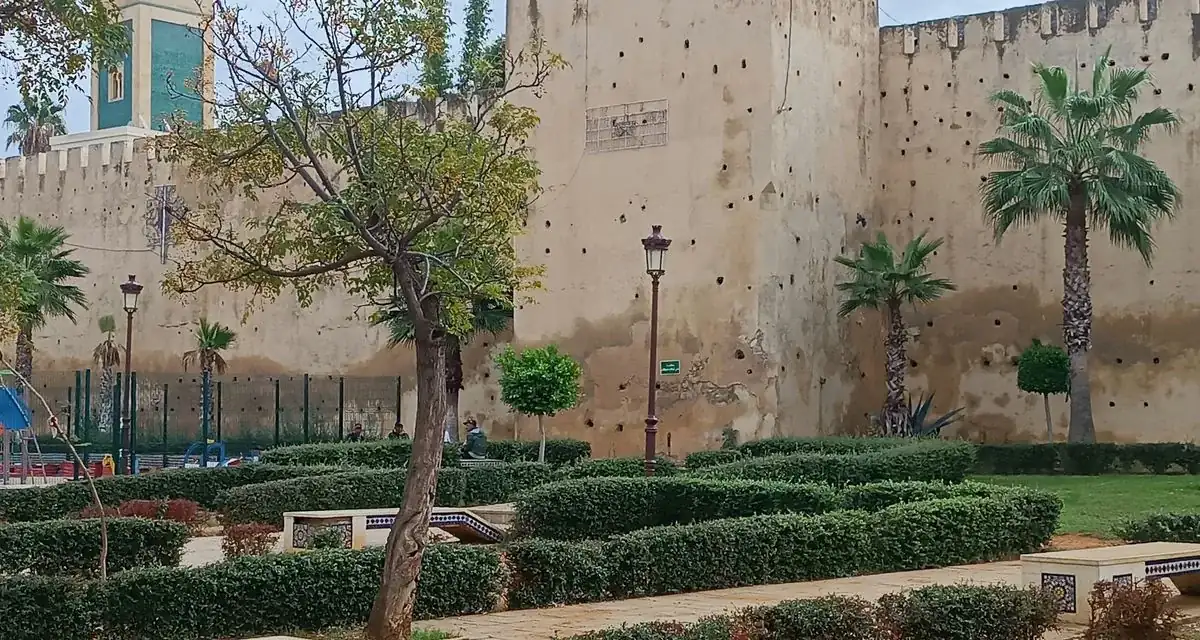
Bab Mansour is the main sight in Meknes, a large gate built in the 18th century with green tiles, carved plaster and tall columns. It is one of the finest gates in Morocco, and it marks the entrance to the imperial city. The gate is free to see from the outside, and it takes about 15 minutes to walk around it and take photos.
The square in front of the gate, Place el-Hedim, is the main square of Meknes. It has cafes, food stalls and a market, and it is busy in the evening. Sit in a cafe on the square with mint tea, and watch the city go by. The square is a good place to start a walk, and to meet a guide for the medina and the royal stables.
The Royal Stables and Granaries
The royal stables and granaries of Moulay Ismail are a short walk from Bab Mansour. The stables could hold 12,000 horses, and the granaries could store grain for the whole city. The buildings are large, cool and dark, with high arches and thick walls. The visit takes about 45 minutes, and the entry fee is a few dirhams.
Walk the stables slowly, and look at the arches and the light from the small windows. The granaries are next door, with a large underground store and a pool that was used for water, and a guide can explain how the whole complex worked. The granaries are next door, with a large underground store and a pool that was used for water. A guide is worth it, as the site has few signs. The stables are best in the morning, when the light is good and the crowds are small.
The Medina and the Mausoleum
The medina of Meknes is smaller and quieter than the medinas of Fes and Marrakech. The lanes are straight, the shops are open, and the market is busy with locals. Walk the medina in the morning, when the shops open and the light is good. The medina has carpets, leather and pottery, and the prices are often lower than in Fes. Haggle gently, starting at about half the first price.
The Mausoleum of Moulay Ismail, near the medina, is the burial place of the sultan who built Meknes. It has fine tile work, carved plaster and a quiet courtyard. Non-Muslims can enter the outer rooms, but not the tomb itself. Dress with care, as it is a place of respect. The visit takes about 30 minutes, and it is free. Non-Muslims can enter the outer rooms, but not the tomb itself, and the tile work and carved plaster are worth a slow look.
Museums and Gardens
Meknes has a small museum in the Dar Jamai, a palace near Bab Mansour. It shows carpets, jewellery, pottery and woodwork from the city. The entry fee is a few dirhams, and the visit takes about an hour. The palace has a garden with orange trees and a fountain, and it is a good rest from the sun. The museum shows carpets, jewellery, pottery and woodwork from the city, and the entry fee is a few dirhams.
The gardens of Meknes are quiet and green. The Agdal Basin, a large pool outside the city, was used to water the royal gardens. It is a short taxi ride from the medina, and it is a good place for a walk in the late afternoon. The city also has a golf course and a park, but the medina and the gate are the main sights for most visitors.
Food in Meknes
Food in Meknes is simple and fresh. Try tagine, pastilla and couscous in the small restaurants near Place el-Hedim. A lunch costs about 8 to 20 euros per person, and a dinner costs about 10 to 25 euros. The cafes on the square serve mint tea, coffee and pastries, and they are good for a slow morning.
Try the local sweets and the fresh orange juice sold in the market. Drink bottled water, and wash your hands before you eat. The food is fresh and the restaurants are clean, so you can eat well with no worry. If you want a smart dinner, the restaurants in the new town are the best choice. Ask your hotel for a tip, as they know the best places. Try the local sweets and the fresh orange juice sold in the market, and drink bottled water with your meal.
Day Trips: Volubilis and Moulay Idriss
Meknes is the best base for Volubilis, the Roman site about 30 km north and 45 minutes by road. Combine Volubilis with Moulay Idriss, a holy hill town about 5 km from the site, for a full day. Start in Meknes, drive to Volubilis in the morning, stop at Moulay Idriss for lunch, and return in the afternoon.
A full-day trip from Meknes covers all three places in about six hours. A private car or a tour is the easiest choice, as there is no direct bus to Volubilis, and the driver waits at each stop. A private car or a tour is the easiest choice, as there is no direct bus to Volubilis. Agree the price before you leave, and ask the driver to wait at each stop. The trip is the best day out from Meknes, and it is worth the drive.
How Many Days Do You Need in Meknes?
One day is enough to see the main sights: Bab Mansour, the stables, the medina and the mausoleum. Two days gives you time for Volubilis and Moulay Idriss, and a slow morning in a cafe on Place el-Hedim. Three days lets you add a trip to Fes, which is about an hour by train, or a walk in the Middle Atlas.
Meknes is a quiet city, and it rewards a slow pace. Leave a free morning for a cafe and a walk on Place el-Hedim, as the gate and the square are the best parts of the city. Do not try to see everything in a few hours. Plan one main sight in the morning, a long lunch, and one sight in the late afternoon. Leave a free morning for a cafe and a walk. The gate and the square are the best parts of the city, and they are best when you have time to sit down.