In short. Marrakech to Merzouga is about 560 km by road, and the drive takes 9 to 10 hours with stops. Most people split it over two days, with a night in the Dades Valley or the Todra Gorges. The road crosses the High Atlas over the Tizi n'Tichka Pass at 2,260 m, then drops to the desert. This guide explains each part of the road, the stops, and how to plan it.
The road in numbers
The full road from Marrakech to Merzouga is about 560 km. A direct drive takes 9 to 10 hours, and that is without long stops. No tour drives it in one day and then adds a camel ride, because that would be too much. The normal plan is to drive for two days, stop at the main sights, and reach the dunes on the second afternoon. The road is paved all the way, and a normal car or minivan can do it.
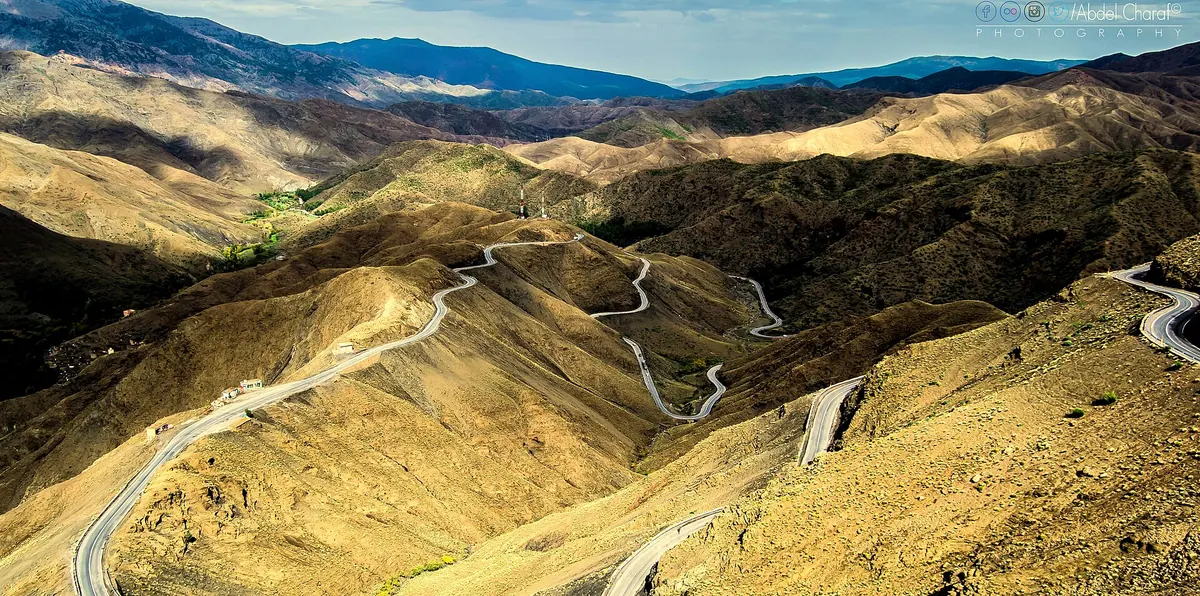
The road has three parts. The first part climbs from Marrakech at 460 m up to the Tizi n'Tichka Pass at 2,260 m. The second part drops through Ouarzazate and the Valley of the Roses to the Dades Valley. The third part runs east through the Todra Gorges and the desert towns of Tinghir, Erfoud and Rissani to Merzouga. Each part looks different, and the stops are part of the trip.
Day one: Marrakech to the Dades Valley
Day one starts early, usually between 7 and 8 in the morning. The first 2 hours climb the High Atlas on a road with many bends. Your driver stops at the Tizi n'Tichka Pass for photos and a coffee. The view covers the mountains and the valleys below. If you get car sick, take a tablet before this part and sit in the front seat.
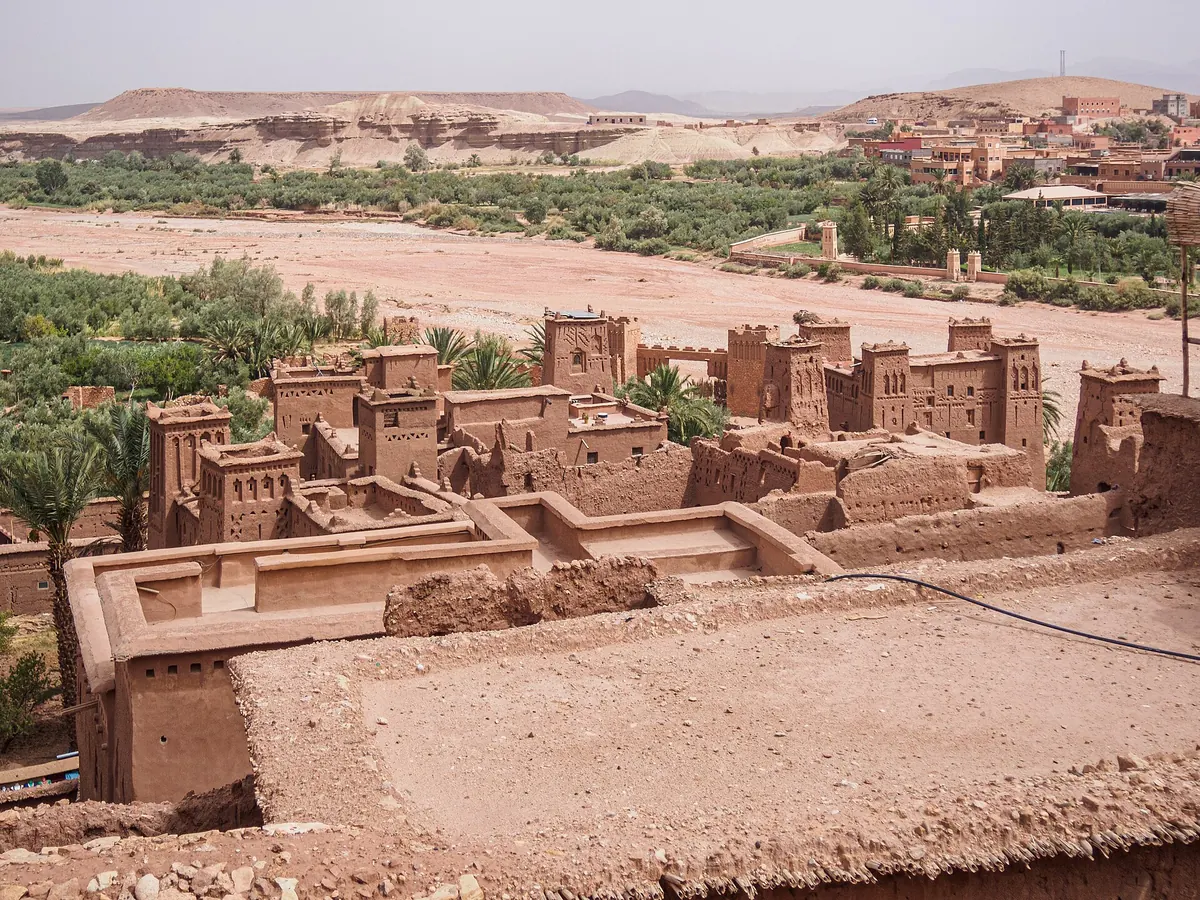
After the pass, the road drops to Ait Ben Haddou, a UNESCO site about 3 to 4 hours from Marrakech. You walk through the old clay village and climb to the top for the view over the river. Lunch is often in Ouarzazate or in the Dades Valley. The day ends in the Dades Valley or in Tinghir, after about 7 to 8 hours on the road with stops. Dinner and a hotel night are part of the tour.
Day two: the gorges to the dunes
Day two starts after breakfast and runs about 4 to 5 hours to the dunes. The first stop is the Todra Gorges, where cliffs rise up to about 300 m on both sides of a narrow road. You walk for 20 to 30 minutes and take photos. The road then runs through palm groves and small towns to Erfoud, a town known for fossils and dates.
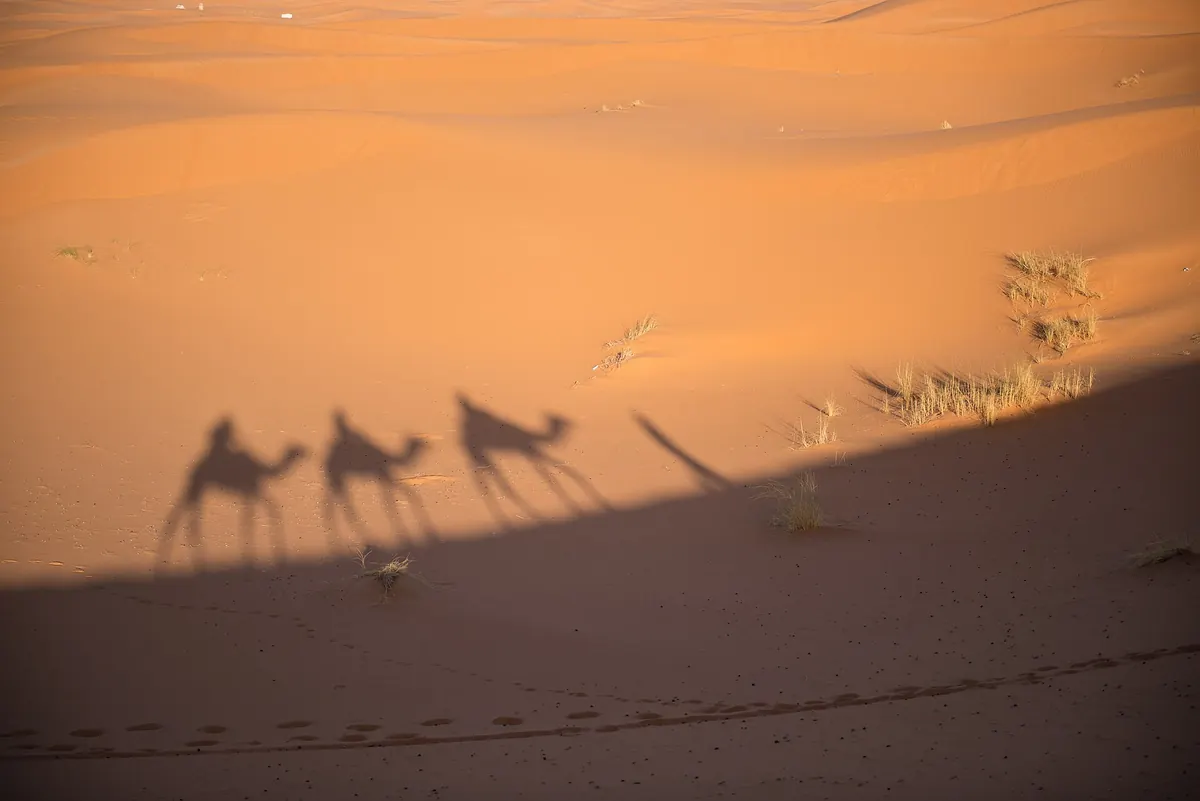
From Erfoud, the road to Merzouga takes about 1 hour. The land turns flat and dry, and the first dunes appear on the horizon. You reach Merzouga in the afternoon, leave your main bag at the hotel, and take a small bag for the camp. The camel ride leaves about 1 hour before sunset and takes about 1 hour to the camp. That timing matters, because the light is best then.
What the road is like to drive
The road is paved and in good shape for most of the way, but it is narrow in the mountains and in the gorges. Your driver knows the bends and the slow trucks, so let them drive. In winter, the Tizi n'Tichka Pass can have snow or ice in the morning, and the drive takes longer. In summer, the road is hot and the car air conditioning works hard. The car stops often, so the drive is broken into short parts.
If you drive yourself, allow more time than the map says. The map time does not count photo stops, lunch or slow trucks. Fill the tank in Ouarzazate or Tinghir, because fuel stops are few after Erfoud. A phone map works on the main road, but the signal drops in the mountains. Download the map before you leave Marrakech.
Stops worth your time
Ait Ben Haddou is the main stop on day one. Plan 1 to 2 hours there, including the walk up. The Todra Gorges is the main stop on day two. Plan 30 to 60 minutes for a short walk. The Valley of the Roses is best in April and May, when the roses are out. The Tizi n'Tichka Pass is a 15 to 20 minute photo stop, not a long visit.
Other stops depend on your tour. Some tours stop at a Berber village, a fossil workshop in Erfoud, or a view point in the Dades Valley. Each stop adds 20 to 30 minutes. A good tour keeps the stops short on day one, so you reach the hotel before dark. If a stop does not interest you, tell your driver. Private tours can skip a stop and spend the time somewhere else.
The way back: same road or on to Fes
Most 3-day tours return from Merzouga to Marrakech on day three. The drive back takes 9 to 10 hours, and you leave the camp after sunrise. The camel ride back to Merzouga takes about 1 hour, then you drive the same road in reverse. You stop for lunch in the Dades Valley or Ouarzazate. You reach Marrakech in the evening, usually between 6 and 8 pm.
If you want to avoid the same road twice, take a tour from Marrakech to Fes. After the desert, the road runs north through the Ziz Valley, Midelt and the Middle Atlas to Fes. That drive takes about 7 to 8 hours from Merzouga to Fes. It is a good choice if you plan to see Fes next. Ask Top Morocco Tours about the route when you book.
How to pick the right tour for this road
Pick a 3-day tour if you want the classic road with the main stops and one night in the desert. Pick a 4-day or 5-day tour if you want more time in the gorges, a night in the Dades Valley, or a slower pace. A 4-day tour often adds a second night near the dunes or a stop in the Draa Valley. The extra day makes the drive feel easy, not rushed.
Pick a private tour if you want to set your own stops and start times. A shared tour follows a fixed plan and a fixed group. Both use the same road and the same main stops. The difference is the pace and the car. Check what is in the price before you book: the hotel night, the camp night, the camel ride and breakfasts are often part of it, while lunch and drinks are often extra.
Planning the drive day by day
Plan the road like this: day one is the mountain day, day two is the gorge day, and day three is the long drive back. On day one, leave Marrakech at 7 or 8 in the morning, stop at the Tizi n'Tichka Pass for 20 minutes, visit Ait Ben Haddou for 1 to 2 hours, eat lunch in Ouarzazate or the Dades Valley, and reach your hotel before dark. On day two, leave after breakfast, walk the Todra Gorges for 30 to 60 minutes, drive through Erfoud to Merzouga in about 4 to 5 hours, and ride the camel to the camp about 1 hour before sunset. On day three, ride back after sunrise, eat breakfast in Merzouga, and drive back to Marrakech in 9 to 10 hours with a lunch stop.
If you have 4 or 5 days, the plan gets easier. Add a night in the Dades Valley so day one ends early, or add a second night near the dunes so you can watch the sunrise twice and walk further into the sand. A slower plan also gives you time for a village walk, a longer stop in the gorges, or a quiet afternoon at the hotel pool. Tell the operator how many days you have and how you like to travel, and ask them to write the plan with the drive time for each day. A plan with real times is a plan you can trust, and it is the best way to enjoy a long road.