In short. The Atlas Mountains run across Morocco in three ranges: the High Atlas, the Middle Atlas and the Anti-Atlas. Most travellers start in Marrakech, drive over the Tizi n'Tichka Pass at 2,260 m, and reach the walking village of Imlil in about 90 minutes. This guide covers the main ranges, the best walks, the villages, and how to plan a day trip or a longer trek without guesswork.
The Three Ranges: High, Middle and Anti-Atlas
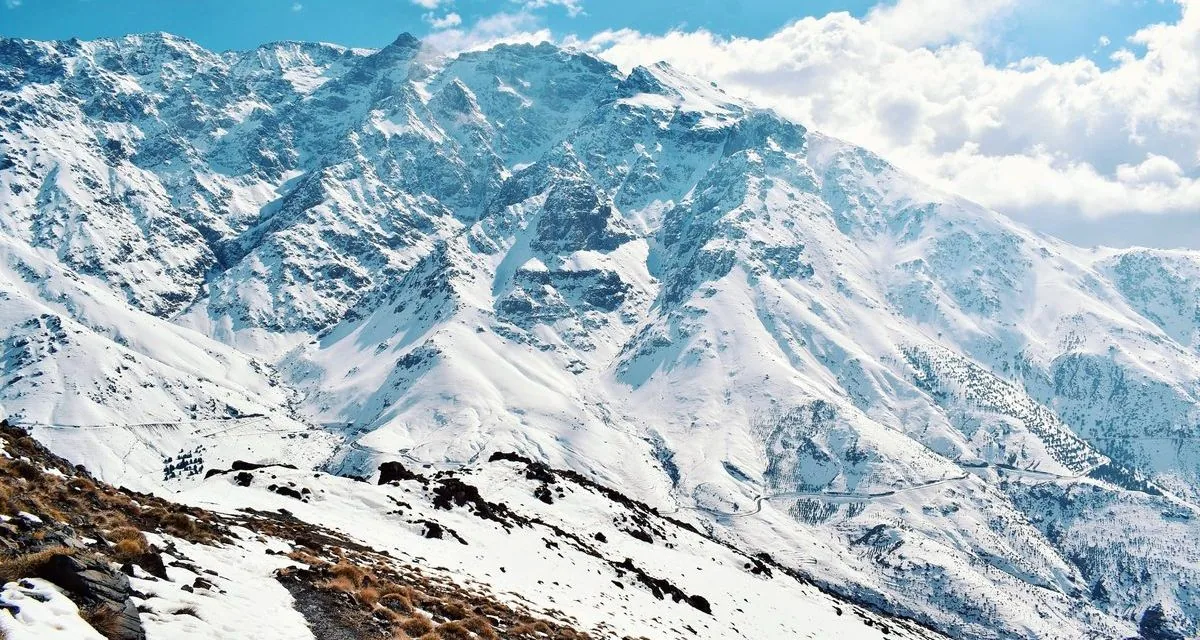
The High Atlas is the tallest range and the one most visitors see first. It holds Mount Toubkal, the highest peak in North Africa, and the village of Imlil at its foot. The road from Marrakech climbs over the Tizi n'Tichka Pass at 2,260 m, then drops toward Ouarzazate and the desert. Snow can sit on the high peaks from November to April, while the valleys below stay green with terraced fields and walnut trees.
The Middle Atlas sits north of the High Atlas, between Fes and Midelt. It is lower, greener and full of cedar forest, lakes and small towns such as Ifrane and Azrou. Barbary macaque monkeys live in the cedar woods near Azrou, and the area suits easy walks and family stops. The Anti-Atlas lies further south, near Tafraoute, with pink granite hills, dry valleys and old villages. It is quiet, warm and good for travellers who want space and slow roads.
Mount Toubkal and Trekking
Mount Toubkal stands at 4,167 m and is the main goal for fit walkers. The standard climb takes two days from Imlil, with one night at a mountain refuge. Day one is a walk of about five hours up the valley to the refuge. Day two starts before dawn and takes around four hours to the summit, then you walk back down to Imlil the same day.
You need a local guide for Toubkal, and a mule can carry your bag for a small daily fee. Summer is the main season, from June to September, when the path is clear of snow. Winter climbs need crampons and ice axes, and only experienced walkers should try them. If two days sounds too much, the walk from Imlil to the village of Aroumd takes about 45 minutes and gives you the same valley views with far less effort.
Imlil and the Berber Villages
Imlil is a small village at 1,740 m, about 65 km south of Marrakech. It is the base for Toubkal and for short walks through the valleys. The village has guesthouses, small shops and mule handlers, and the main street is short enough to walk in ten minutes. From Imlil you can walk to Aroumd, a stone village with views across the valley, or follow the river path to the waterfalls at Sidi Chamharouch.
Village life here runs on farming, mules and walking. Terraces grow walnuts, apples, cherries and potatoes, and water comes down from the peaks in stone channels. Many families run guesthouses, so a night in Imlil puts money straight into the village. Ask before taking photos of people. A smile and a short greeting in Tamazight or Arabic go a long way, and most hosts are glad to explain how the village works.
Day Trips from Marrakech
The easiest Atlas day trip is the Ourika Valley, about 60 km from Marrakech and around 90 minutes by road. You drive through small villages, stop at a riverside cafe, and walk up to the Setti Fatma waterfalls. The walk takes about an hour and the path is rocky, so wear shoes with grip. Lunch by the river costs about 8 to 20 euros per person, and most tours return to Marrakech by late afternoon.
The Imlil day trip suits walkers more than sightseers. You drive to Imlil, walk to Aroumd with a guide, and eat lunch in a village home or a small guesthouse. The walk is about two hours in total and the ground is uneven. A third option is the Ouzoud waterfalls, about 150 km from Marrakech and three hours each way, so it is a full day. Pick one valley per day. Trying to see two in one day means most of your time goes to driving.
When to Go: Seasons in the Mountains
Spring, from March to May, is the best time for most travellers. The valleys are green, the fruit trees are in flower, and daytime temperatures in Imlil sit near 20 degrees. Rain is still possible, so pack a light waterproof layer. Autumn, from September to November, is the second best window, with clear skies, warm days and cool nights.
Summer in the valleys is hot at midday but cooler than Marrakech, so it works well for early walks. Start walking before 9 am and rest in the shade at midday. Winter brings snow to the high peaks and cold nights in the villages. Roads over the Tizi n'Tichka Pass can close for short periods after heavy snow, so check conditions the day before you travel. If you visit in winter, bring warm layers and a hat.
What to Pack for the Atlas
Pack layers, even in summer. Mornings in Imlil are cool, midday is warm, and the wind at a pass or a summit is cold. Bring a fleece, a light waterproof jacket, a sun hat and sunscreen. The sun is strong at altitude, and you can burn fast even on a cloudy day. A small day pack with water, snacks and a first aid kit covers most short walks.
Footwear matters more than anything else. Wear walking shoes or boots with grip, not flat city shoes. Paths are rocky, dusty and steep in places, and a slip on loose stone is the most common small injury. Bring cash in dirhams, as small village shops do not take cards. A phone charger and a paper map help too, because mobile signal drops in some valleys. If you plan to trek, bring walking poles. They help a lot on the long descent.
Getting There and Getting Around
Most travellers reach the Atlas by private car or by tour from Marrakech. A private driver costs more than a shared minibus but lets you stop where you like and set your own pace. Shared day trips leave Marrakech in the morning and return the same evening. Buses run to Imlil from Marrakech, but times change and the trip takes longer, so a private transfer is simpler for a short visit.
Once you are in the mountains, walking and mules are the main transport. Roads reach Imlil and the main valleys, but the smaller villages are reached on foot. Your guesthouse can arrange a mule and a guide, and prices are agreed in advance. If you drive yourself, take the pass slowly. The road has many bends, and trucks and buses use it too. Fill the tank in Marrakech, as fuel stations are few in the high valleys.