In short. Pack light for a desert tour. You carry your own bag to the tent, and the camel carries only a small bag. Take layers for cold nights, sun cover for hot days, and closed shoes for sand and rock. Keep your passport, money and phone in one small bag you always carry. This list covers 2 to 5 days in the Sahara.
The bag: small and soft
Take a soft bag or a small backpack, not a hard suitcase. The road from Marrakech to Merzouga is about 560 km and takes 9 to 10 hours, and your main bag stays in the car or at the hotel. For the night in the camp, you take only an overnight bag. A hard case is hard to carry over sand and up tent steps. Pack your overnight things in a bag you can lift with one hand.
Keep a small day bag for the road. It holds water, sun cream, a hat, snacks, your phone and your camera. You stop often on the drive, at the Tizi n'Tichka Pass at 2,260 m, at Ait Ben Haddou, and in the Todra Gorges. A day bag means you do not open your main bag at every stop. Put your passport, cash and cards in a zip pocket inside that bag.
Clothes for hot days and cold nights
Desert days are hot and desert nights are cold. That gap is the main thing to pack for. In the day, wear light cotton or linen: a T-shirt, long trousers and a shirt you can open. Long sleeves protect you from the sun better than a vest. In the evening, add a fleece or a light jacket. In winter, add a warm jacket, a hat and gloves for the morning.
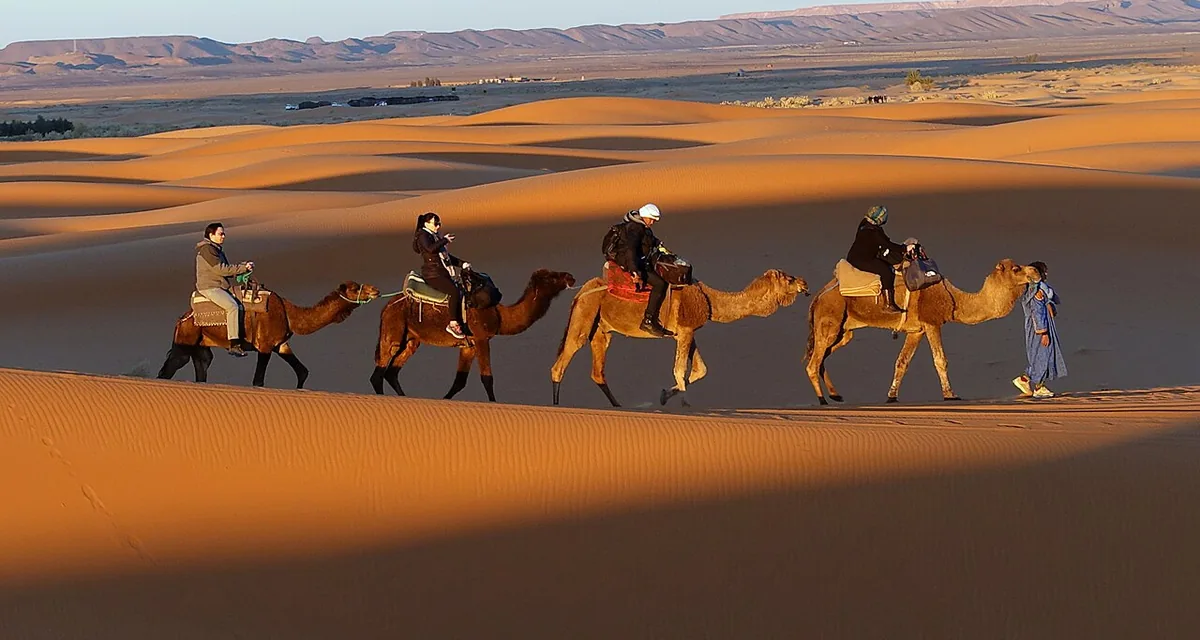
Take two sets of day clothes for a 3-day tour and one warm layer. You can wash nothing on the road, so pick clothes you can wear twice. Long trousers are better than shorts for the camel ride, because the saddle rubs your legs. A scarf is useful in every season: it covers your head from sun, your mouth from dust, and your neck from wind. Roll your clothes to save space.
Shoes: closed, light and easy
Wear closed shoes with a good sole. Trainers or light walking shoes are best. Sand gets into sandals and the rock at the gorges is sharp. You walk on sand, on stone steps at Ait Ben Haddou, and on the road at the stops. A pair of trainers does all of that. Break them in before the trip, because new shoes hurt on a long day.
Bring a pair of sandals or flip-flops for the camp. You take your shoes off at the tent door, and sandals are handy for the walk to the bathroom at night. In a standard camp the bathroom is shared and a short walk from the tent, so a torch and sandals help. In a luxury camp the bathroom is private and inside the tent. Pack one pair of warm socks for winter nights.
Sun, water and health
The sun in the desert is strong all year, even in winter. Pack sun cream with SPF 50, lip balm with sun cover, and sunglasses. Put sun cream on before the camel ride, because the sun hits your face and neck from the side. A wide hat or a cap with a neck flap works well. Reapply sun cream after lunch, because sweat and dust wear it off fast.
Bring a refillable water bottle of at least one litre. Your driver stops for water, but a bottle in your day bag means you drink often. Take any medicine you need in your day bag, not in your main bag. Add plasters, painkillers and hand wipes. If you get car sick on mountain roads, take tablets before the Tizi n'Tichka Pass. The road has many bends.
Phone, camera and power
There is no plug in most standard tents, so bring a power bank and charge it the night before the desert. Your phone is your camera, your map and your torch, so keep it charged. A small torch is useful for the walk to the bathroom and for the night sky. Put your phone in a zip bag on the camel ride, because sand gets into pockets and ports.
If you bring a camera, take a spare battery and a lens cloth. Sand and dust sit on the lens at sunset. A simple camera strap helps on the camel, because you need both hands to hold on at first. Drones need care: ask your guide before you fly one near the camp, and do not fly over people or animals. Keep your charger in your overnight bag for the hotel nights.
Money, papers and valuables
Take cash in Moroccan dirhams for lunch, drinks, tips and small buys. Lunch on the road costs about 8 to 20 euros per person, and most road restaurants take cash only. Cards work in Marrakech and Fes, but not in the desert or in small villages. A small amount of cash per day is enough. Keep it in two places, so you do not lose all of it at once.
Carry your passport or a copy of it. Hotels and camps need it for check-in. Keep the original in your day bag and a photo of it on your phone. Do not bring jewellery or things you would miss if they got lost. The desert is safe, but sand, camels and long drives are hard on valuables. Leave your laptop at the hotel in Marrakech if you can.
What to leave at home
Leave the big suitcase, the hair dryer and the heavy books at home. There is no plug in a standard tent and little room in the car for big bags. Leave white clothes you care about, because red desert dust marks them fast. Leave high heels and new shoes, because the ground is sand, stone and steps. Leave the drone if you are not sure about the rules.
Do not pack food for the camp. Dinner and breakfast are part of the tour, and the camp cooks a hot meal. You can bring snacks for the road, such as nuts, dates or biscuits. Do not bring a sleeping bag unless your tour says to. Camp beds have blankets and sheets. If you are not sure about one item, ask Top Morocco Tours before you pack.
A packing checklist for 3 days
For a 3-day desert tour, use this list as a final check before you close your bag. Day bag: passport, cash in dirhams, phone, power bank, water bottle, sun cream, hat, sunglasses, snacks and any medicine. Overnight bag for the camp: warm layer, long trousers, T-shirt, warm socks, underwear, toilet bag, torch, sandals and a scarf. Main bag in the car: one extra set of clothes, a second warm layer in winter, and your charger. Check each item the night before you leave Marrakech, because the shops on the desert road sell little and the camp sells only water and soft drinks.
If you forget something, ask your driver. The driver stops in Ouarzazate and Tinghir, where small shops sell water, snacks, hats and sun cream. Marrakech has the best shops, so buy what you need there before the tour starts. Do not buy a new pair of shoes on the morning of the tour, because new shoes hurt on a long day. Wear the shoes you already know. Pack the night before, weigh the bag in your hand, and take out anything you have not used on a trip before. A light bag makes the camel ride, the camp and the whole road easier.